Showing posts with label ballade. Show all posts

Monday, July 10, 2017

Chopin and Keats - Consumption, Genius, and Love (Vol. 8, No. 7)

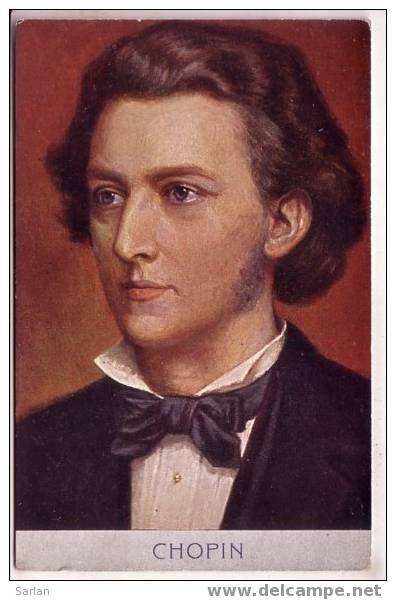
Chopin and Keats. Two nineteenth-century geniuses, a poet of words, and a poet of sounds, shared more than creative talents and artistic achievements: they both surprised the world with the personal tone of their works, they both died at a young age after suffering multiple hemorrhages from lungs,  coupled with extensive and recurrent coughing fits. They were both in love with unattainable women they could not marry, they both wrote and kept beautiful love letters.

Fryderyk Chopin (1810-1849) lived for 39 years. John Keats (1795-1821) lived for 26 years (actually 25, if you count the completed full years only). Both relied on family support in their emotional life, while living far away from their family homes, moving frequently, and surrounded by the ever-changing circle of friends, some unreliable, others faithful and caring.

Fryderyk Chopin in evening attire

John Keats reading

Tuberculosis?

Keats actually had tuberculosis that killed him at the age 25 in 1821; Chopin's lung disease was diagnosed as tuberculosis and that's what was on his death certificate but the illness is still being discussed, with cystic fibrosis being the next most favored candidate since this hypothesis was first put forward in the 1980s.

Chopin's health started to deteriorate in his teen years, and for the rest of his 39 years, he was under the care of a series of physicians. He suffered coughs, fevers, hemorrhages from the lungs (for over 20 years!), and other symptoms of lung disease. He was too weak to exercise, play sports, or even marry - his health was not strong enough to become a husband and support a wife with children.

Keats started getting persistent sore throats, fevers and coughing fits at a young age. He managed to go on a walking tour of Scotland that inspired his poetry, but later was often confined in bed. Like Chopin, he could not marry because of bad health and complete lack of resources. Towards the end of his life, he had to rely on the kindness of strangers to survive.

Alone, Dreaming of the Beloved


Fanny Brawne

John Keats was in love with Fanny Brawne (Frances Brawne Lindon, 1800-1865), but stayed away from her, knowing of his illness and that with his lack of financial stability, income, and poor health he was not a prospect for a husband.  Yet, the love resulted in some of the most beautiful poetry ever written. Here is an example:

“Bright star, would I were stedfast as thou art”

Bright star, would I were stedfast as thou art— 
         Not in lone splendour hung aloft the night 
And watching, with eternal lids apart, 
         Like nature's patient, sleepless Eremite, 
The moving waters at their priestlike task 
         Of pure ablution round earth's human shores, 
Or gazing on the new soft-fallen mask 
         Of snow upon the mountains and the moors— 
No—yet still stedfast, still unchangeable, 
         Pillow'd upon my fair love's ripening breast, 
To feel for ever its soft fall and swell, 
         Awake for ever in a sweet unrest, 
Still, still to hear her tender-taken breath, 
And so live ever—or else swoon to death.

Maria Wodzinska

Chopin was first enamoured of soprano Konstancja  Gladkowska (1810-1889), or so the story says, for this was not a serious romance as yet: they met at a concert in 1829, and the 20-year-old pianist left Poland in 1830 to never return. The singer continued singing for two more years, she married in 1832 and lived with her husband Jozef Grabowski on his estate. Not much here to spin into an "distant beloved."

More chances come from Chopin's next romance, with a lady of a noble family, Maria Wodzińska (1819-1896) whom he seriously considered marrying. He pursued her for several years, hoping to convince her parents that with his Parisian residence and steady teaching income he was a good prospect for a husband. Her parents did not think so and the composer was rejected after being engaged in 1836-37. He was 26-27 then, the age Keats died, and his "distant beloved" was just 17, too young to make any life-changing decisions on her own. 

There were other women in Chopin's life, of course, the writer George Sand (Aurore Dudevant) being the most famous. Lots of information about this story is available in print and other media. You can also watch a documentary on "The Women Behind the Music," http://topdocumentaryfilms.com/chopin-the-women-behind-the-music/ - including fellow musicians Jenny Lind and Pauline Viardot.

Love Letters


Chopin's letters from Maria Wodzinska

The lovely correspondence of John Keats and Fanny Browne was first published in 1878, and it was later widely cited in Keats's biographies.

Here's an example, Keats writes to Browne:

July 8, 1819

My sweet Girl—Your Letter gave me more delight than any thing in the world but yourself could do; indeed I am almost astonished that any absent one should have that luxurious power over my senses which I feel. Even when I am not thinking of you I receive your influence and a tenderer nature stealing upon me. All my thoughts, my unhappiest days and nights have I find not at all cured me of my love of Beauty, but made it so intense that I am miserable that you are not with me: or rather breathe in that dull sort of patience that cannot be called Life.

I never knew before, what such a love as you have made me feel, was; I did not believe in it; my Fancy was afraid of it, lest it should burn me up. But if you will fully love me, though there may be some fire, ‘twill not be more than we can bear when moistened and bedewed with Pleasures.

You mention ‘horrid people’ and ask me whether it depend upon them whether I see you again. Do understand me, my love, in this. I have so much of you in my heart that I must turn Mentor when I see a chance of harm befalling you. I would never see any thing but Pleasure in your eyes, love on your lips, and Happiness in your steps. I would wish to see you among those amusements suitable to your inclinations and spirits; so that our loves might be a delight in the midst of Pleasures agreeable enough, rather than a resource from vexations and cares. But I doubt much, in case of the worst, whether I shall be philosopher enough to follow my own Lessons: if I saw my resolution give you a pain I could not.

Why may I not speak of your Beauty, since without that I could never have lov’d you? I cannot conceive any beginning of such love as I have for you but Beauty. There may be a sort of love for which, without the least sneer at it, I have the highest respect and can admire it in others: but it has not the richness, the bloom, the full form, the enchantment of love after my own heart. So let me speak of your Beauty, though to my own endangering; if you could be so cruel to me as to try elsewhere its Power.

You say you are afraid I shall think you do not love me—in saying this you make me ache the more to be near you. I am at the diligent use of my faculties here, I do not pass a day without sprawling some blank verse or tagging some rhymes; and here I must confess, that, (since I am on that subject,) I love you the more in that I believe you have liked me for my own sake and for nothing else. I have met with women whom I really think would like to be married to a Poem and to be given away by a Novel. I have seen your Comet, and only wish it was a sign that poor Rice would get well whose illness makes him rather a melancholy companion: and the more so as so to conquer his feelings and hide them from me, with a forc’d Pun.

I kiss’d your Writing over in the hope you had indulg’d me by leaving a trace of honey. What was your dream? Tell it me and I will tell you the interpretation threreof.

Ever yours, my love!

https://www.poets.org/poetsorg/text/selected-love-letters-fanny-brawne

Chopin's package of letters from Wodzinska, with an inscription "my misery" (moja bieda) is found in his archives. Tied with a pink ribbon, it is a memorial to disappointment and loneliness of the sick composer.

In early spring 1837, his last letter from Maria Wodzinska, ended with:

‘Please accept my assurances of my feelings of gratitude, which I owe to You. Please be sure of the attachment which all our family cherishes for You, especially Your worst pupil and childhood friend. Adieu’."

Ballads 

It is interesting to note the classically polished forms created by both artists, the jewel-like miniatures by Chopin, the intricate poems by Keats. They had one genre in common: the ballad. Of course, it was different in music and in poetry, but still... The folk narrative, the melancholy, strange, supernatural imagery, the tumultous emotions... 

Here's a Ballad by John Keats, that very much reminds me of Adam Mickiewicz's Switezianka, that was often associated with one of Chopin's piano ballads:

La Belle Dame sans Merci: A Ballad
BY JOHN KEATS

O what can ail thee, knight-at-arms, 
       Alone and palely loitering? 
The sedge has withered from the lake, 
       And no birds sing. 

O what can ail thee, knight-at-arms, 
       So haggard and so woe-begone? 
The squirrel’s granary is full, 
       And the harvest’s done. 

I see a lily on thy brow, 
       With anguish moist and fever-dew, 
And on thy cheeks a fading rose 
       Fast withereth too. 

I met a lady in the meads, 
       Full beautiful—a faery’s child, 
Her hair was long, her foot was light, 
       And her eyes were wild. 

I made a garland for her head, 
       And bracelets too, and fragrant zone; 
She looked at me as she did love, 
       And made sweet moan 

I set her on my pacing steed, 
       And nothing else saw all day long, 
For sidelong would she bend, and sing 
       A faery’s song. 

She found me roots of relish sweet, 
       And honey wild, and manna-dew, 
And sure in language strange she said— 
       ‘I love thee true’. 

She took me to her Elfin grot, 
       And there she wept and sighed full sore, 
And there I shut her wild wild eyes 
       With kisses four. 

And there she lullèd me asleep, 
       And there I dreamed—Ah! woe betide!— 
The latest dream I ever dreamt 
       On the cold hill side. 

I saw pale kings and princes too, 
       Pale warriors, death-pale were they all; 
They cried—‘La Belle Dame sans Merci 
       Thee hath in thrall!’ 

I saw their starved lips in the gloam, 
       With horrid warning gapèd wide, 
And I awoke and found me here, 
       On the cold hill’s side. 

And this is why I sojourn here, 
       Alone and palely loitering, 
Though the sedge is withered from the lake, 

       And no birds sing.


And here's Chopin's Ballade No. 2 in F major, Op. 38, with the text of Switezianka superimposed on the screen in English translation. Fascinating!


https://www.youtube.com/watch?v=g20mMVPFZKE

To read more about Chopin's ballades and poetry, try the article by Dorota Zakrzewska:

http://pmc.usc.edu/PMJ/issue/2.1.99/zakrzewska.html

Death Abroad

Chopin died in Paris far from his family and loved ones (except sister Ludwika), in the company of friends and fellow artists, his letters were filled with nostalgia and longing for the family companionship.  His death was a "public spectacle" of sorts, with musicians and well-wishers gathered around the death-bed of the genius. His gravest fear was to be buried alive, so to ensure that this grim possibility does not become real, he required an autopsy before burial.

Felix-Joseph Barrios, The Death of Chopin, 1885, Museum of Czartoryski Family in Krakow 

http://culture.pl/en/article/chopins-gravest-fear

John Keats died in Italy, far from his beloved Fanny Browne, and his brother George who emigrated to America; John was with his artist friends who took care of him in his last days. His younger brother, Tom, also died of tuberculosis, and John was misdiagnosed; instead of being properly treated for the incurable-then disease, he had his blood drawn and was served with mercury.  He would have died of this treatment even without the TB!

Death Portraits

Making pencil sketches of dying geniuses on their deathbeds was something of a 19th century hobby, here are the portraits of both Keats and Chopin:


Joseph Severn, sketch of John Keats on his death bed, 1821

Chopin portrait on his death bed by T. Kwiatkowski, vintage postcard.

Autopsy

Both artists had autopsy done after death. John Keats's autopsy after his death in Rome showed that his lungs were completely destroyed by TB, the cause of death was confirmed.  Chopin's autopsy required by his last will, to ensure that he would not be buried alive, did not show the typical TB damage to lung tissue, hence the ongoing discussions about the cause of his life-long illness, most frequently identified with cystic fibrosis.

Plaster Casts - Face Masks

As it was customary, both Chopin and Keats had plaster casts of their faces made. Keats image dates back to 1816, when his friend, artist Benjamin Robert Haydon did a cast of life-mask.


In addition to the death mask made by Auguste Clésinger immediately after his demise on 17 October 1849 Chopin also had a cast of his hand made on his death bed.

 Chopin Death Mask. Photo courtesy of the Royal Northern College of Music

Chopin's hand, cast on a vintage postcard. Maja Trochimczyk collection.

Tombstones


Chopin's grave at Pere Lachaise cemetery in Paris is always surrounded by fresh flowers and gifts; it is taken care of by a local Polish group that keeps the flowers in good order and provides vases with water to place the bouquets. The mournful figure on the top is the muse of music, Euterpe, by the husband of Solange, daughter of George Sand, Auguste Clésinger (1814-1883).

Chopin's heart is in the pillar of the Holy Cross Church in Warsaw, on the left. 
It was smuggled to Poland by his sister, Ludwika. http://www.classicfm.com/composers/chopin/news/heart-exhumed-warsaw/

John Keats has a lovely, simple monument in the Protestant Cemetery in Rome, among green trees, with a poetic epitaph for the "Young English Poet" - "Here Lies One whose Name was Written in Water."

Keats's  tombstone in Rome


Thursday, April 26, 2012

Chopin at Midnight, Chopin Behind Bars (Vol. 3, No. 6)

Midnight Fire - Diamond Rose Brooch on Black Velvet, for Poem by Maja Trochimczyk
I listen to Chopin when I drive. My most recent find - all the etudes recorded by Louis Lortie (You Tube recording of Lortie ). The three dramatic ones at the end of Op. 25 are, as a set, a particular favorite. His timing is impeccable and the drama in the music well balanced with the classical perfection of form.

Another favorite CD that I recently returned to is of the two Piano Concerti with Krystian Zimerman at the keyboard, conducting his specially assembled orchestra - Polish Festival Orchestra. The clarinetist from that orchestra, Jan Jakub Bokun, has told me about the experience of rehearsing and playing with the Maestro. It was very strenuous, but immensely rewarding. One phrase, one detail, would take a long time to polish - sometimes aggravatingly long time. It had to be done to perfection... and it was. Just listen to the miraculous details - bringing out inner voices, phrasing, expression... Zimerman's Chopin is a true romantic, quickly moving from one emotional extreme to another, from enchantment to torment. An astounding vision of grand proportions. These are not little pieces of "stile brillante" provenance, ornamental, made to please. These are powerful expressions of the soaring human spirit.

OK, let's leave it at that. The spirit... What about the spirit? First, let me reflect on the spirit of Polish pride. To welcome the year 2010, just as I was finishing the "Chopin with Cherries" anthology that gave rise to this blog, I went to friends' house for a New Year's Eve Party. I never spent that time with this particular family and wanted to do something different, something I had not done before. It was interesting - filled with children and games, not serious adult dinner conversation and dancing.

Young Chopin Vintage Postcard from Maja Trochimczyk's Collection
But one dance captured my attention and remained in my memory: Chopin's Polonaise in A Major, Op. 40, nicknamed "The Military" (the link points to a YouTube recording by Maurizio Pollini). Yes, the same Polonaise that gave its first notes to a signal of the British broadcasts to occupied Poland during World War II. And here we are, dancing? Just after midnight all the guests at the party lined up in a long line of couples, the host sat at the grand piano and off we went. Around the living room, out onto the patio, up and down the steps, out one door, in another, all over the house... The moon was unusually bright that night, surrounded by an enormous halo, a portent of things to come. I felt a rush of pride, elation even, when we moved along with dignity, in triple meter: one long step with bended knees and two short ones. Down, up, up, down, up, up, around the house, around the world... It was so incredibly moving - a small group of Poles and their international rag-tag bunch of friends dancing to music written almost two hundred years ago and heard in so many homes, on so many concert stages. Welcome the new year, the year of Chopin! That was two years ago - and the tradition of dancing that particular Polonaise at midnight continues.

On the way back home, I drove through an unfamiliar neighborhood and saw boys playing with a bonfire on the front lawn of their small house. It was a working class neighborhood with tiny houses squished in neat rows on streets leading up to the hill of the Occidental College. The moon, the fire, the dance - I was inspired to write a haibun about it. It was recently published in an Altadena anthology, Poetry and Cookies, edited by Pauli Dutton, the Head Librarian of the Altadena Public Library:

Midnight Fire

In the golden holiness of a night that will never be seen again and will never return… (From a Gypsy tale)

After greeting the New Year with a Chopin polonaise danced around the hall, I drove down the street of your childhood. It was drenched with the glare of the full moon in a magnificent sparkling halo. The old house was not empty and dark. On the front lawn, boys were jumping around a huge bonfire. They screamed with joy, as the flames shot up to the sky. The gold reached out to the icy blue light, when they called me to join their wild party. Sparks scattered among the stars. You were there, hidden in shadows. I sensed your sudden delight.

my rose diamond brooch
sparkles on the black velvet -
stars at midnight


© 2010 by Maja Trochimczyk

I wrote more verse about the Polonaise itself, but all the descriptions fell short of the delight I felt that night, so it was reduced to just an introduction to a story that has no end. The contrast of warm flames and icy moonlight was unforgettable. I added the romance, of course - poetry is not supposed to be real, though, when rooted in an actual experience it touches a nerve in listeners. After one reading I was asked by an eager member of the audience: "So what about the man who gave you that brooch? Where is he now?" "There was no man. This is my brooch, I got it for my daughter and it returned to me," I said. There was nobody lurking in the shadows. . . The poem sounds better this way, though.

Fast forward two years, and I'm playing recordings of Chopin in jail. This is the path that I took, and this is where it is going. . . forward. My students are inmates who have completed the Sheriff's Education-Based Incarceration program, and are approaching dates of their release after completing their sentences. I do not ask what they are in for, it does not matter. What matters is that once released they never come back. Jailing them is a huge cost to society and committing crimes does not help them or anyone else. It is just not the right thing to do. But many offenders keep returning to jails, keep doing the same thing that they were always doing. My approach to changing their thinking, their image of self and the world, involves classical music. Chopin, in particular. Due to his serious illness, dying of TB, composing between fits of coughing and spitting blood, he can be an example of heroic courage. William Pillin expressed this idea very well, in his poem "Chopin" (included in the Chopin with Cherries anthology):

Chopin

(excerpt from a poem by William Pillin)


White and wasting he dotted
with splashes of blood his lunar pages,
carrying death like a singing bird
in his chest, his tissue held together

by dreams and bacilli. “I used to find him,”
wrote George Sand, “late at night at his piano,
pale, with haggard eyes, his hair almost standing,
and it was some minutes before he knew me.”

In Majorca, the doctors
shuddered at his blood-flecked mouth,
burned his belongings, compelled him
to take refuge in a former monastery.

“My stone cell is shaped like a coffin.
You can roar — but always in silence.”
When it stormed he wrote the ‘raindrop’ prelude
and from the thunder he fashioned an étude.

*

“I work a lot,” he wrote to his sister,
“I cross out all the time, I cough without measure.”
With death’s hand on his slender shoulder
he created ballades, études, nocturnes.


Chopin had what it takes to succeed against all odds. He used his time well - he created something lasting that speaks to us two hundred years later. They can do it too. It is heroic courage that is needed to succeed when you leave jail with a felony record, no friends to turn to (because those you had would bring you straight back to jail and those you hurt would not speak to you again), no home, no job...

America is very punitive. Not only does it have the highest rate of incarceration in the world: one in thirty one adults is under correctional supervision, well over 700 people per 100,000 adult residents. The second highest rate is in the second most punitive country, Russia. There, about 500 inmates are locked up per 100,000 of adults. Other countries have a fraction of that. The "war" of imprisonment was clearly won by the U.S. There are serious societal costs associated with that dubious victory. The stigma of having been once in prison or jail remains and permanently marrs the record of an individual who has virtually no chance for redemption. Job applications feature a box: have you ever been incarcerated, or committed felony, or misdemeanor? Once you check the box, the application lands in the garbage bin. I tell my students behind bars that they have to be really tough to ignore the rejections and insults that will come their way. Their sentences are finished but the stigma is there and will bring them back if they do not fight it by having the courage to be good.

Poster for Polanski's The Pianist
Chopin helps here. How? We listen to a Nocturne and then to the same Nocturne played by The Pianist's Adrien Brody in an old-fashioned suit. The camera pans out to show the engineer's booth. This is a live broadcast of the Polish Radio in Warsaw. This is September 1939. Soon the bombs begin to fall, the pianist initially refuses to stop playing but has no choice. He falls off the bench, the building is destroyed by German bombs, and his odyssey begins. The astounding, true story of survival against all odds - the story of Wladyslaw Szpilman, as told by Roman Polanski (another Holocaust survivor) leaves the incarcerated men I'm speaking to visibly shaken. The stellar beauty of the soaring Nocturne melody is cut down by the noise of explosions. War is evil, always evil. What did the musicians do to deserve their fate? What did the residents of Warsaw do to deserve being killed by German bombs? Nothing. War is a calamity that has to be survived. Living with the stigma of incarceration requires survival skills too. It requires a lot of courage - shown by the pianist in the film and the character's real-life model. It requires a persistent clinging to life, the good life.

I pan forward to another favorite scene in the film: the famous Ballade that Szpilman played for the German officer. This has to be one of the most famous music scenes in the whole history of film-making. When the can of pickles falls down from the pale, think hands of the starving musician and rolls to the feet of the uniformed German officer... when the gaze of the emaciated, long-haired pianist dressed in rags meets the eyes of the proud soldier... Then, the pianist begins to play and the Ballade takes them both on a journey. Away from destruction, away from hunger and suffering - somewhere else.

Here, courage and humanity triumph. The officer has to break his laws and his orders if he wants to save the life of the starving pianist. He does so, moved by Chopin's music that brought him back to the time when there was no war, only life and happiness. He must have heard such beautiful music at home, before the tragedy began. The extraordinary courage of the pianist, the compassion of the "enemy" and the drama of the music speak directly to the heart. Would the lesson stick? I do not know, I can only try to share it.

Is it worth my time? I hear comments: "lock them up and throw away the key." Not everyone behind bars committed, serious violent crimes and those who did would have been sent to the prisons, not jails. Once they did something wrong, paid the price for it and returned to the society "rehabilitated" - their sentences are supposed to be over and a new life is supposed to begin. But more often than not, it does not. They cannot find jobs, cannot earn a living, cannot function. Some are willingly returning to drug dealing or stealing. Others feel cornered, feel they have no option. If they do it the second time, the sentence will be longer, the return to the "narrow path" harder. I do not write it to excuse them. But it is important for them to know that they can stay on the "narrow path" of honest life, if they make some sacrifices, just like Chopin had to make sacrifices in order to continue to compose. What other option do we have?